

Leadership often looks glamorous from the outside – vision statements, big decisions, high-profile wins. But ask those who practice it every day, and a different picture will emerge. Leadership can not be defined by the stage moments alone; it needs to show up in the quiet, often overlooked situations that shape how teams work together.
How you respond to conflict.
How you handle mistakes.
How you create clarity in the middle of uncertainty.
These are the moments that ripple through an organization. And they are the moments where leadership feels the heaviest.
The Human Side of Supercharging Teams
Every leader wants a team that feels energized and capable of achieving great things. Yet “supercharging” a team is not merely about motivational speeches or pushing for higher velocity. It should start with the smaller actions that build trust and momentum over time.
When leaders treat these moments with care, teams respond with openness, resilience, and commitment. That is how performance is inspired – not through pressure, but through character consistently applied.
Why Process Matters More Than Style

Leadership is often framed as a personal trait: charisma, confidence, decisiveness. While these qualities help, they are not enough to sustain teams over the long run. What keeps teams healthy and productive is a process that works for them.
A process should not be about bureaucracy or strict control. It is a repeatable rhythm that supports both delivery and connection. Leaders who design environments where collaboration flows smoothly reduce friction and free people to focus on meaningful work.
Some hallmarks of a process that works include:
When leaders shape processes that respect people’s time and attention, the result is stronger alignment, higher engagement, and fewer recurring frustrations. Process, done right, is not a limiter – it is an enabler.
The Role of Technology and Tools
No discussion of modern leadership is complete without acknowledging the weight of technology. Tools shape how people work, communicate, and collaborate. They can either amplify leadership or undermine it.
For example:
Leaders who use technology to extend conversations, capture insights, and make decisions transparent help their teams work smarter. Leaders who use tools as surveillance mechanisms or blunt metrics damage trust and motivation.
Technology should never replace leadership – it should strengthen it. When used thoughtfully, tools make it easier for leaders to provide clarity, for teams to collaborate, and for organizations to adapt quickly.
Leaders are pulled in many directions – deliver results, empower teams, adopt new technologies, refine processes.
The weight comes from knowing that every decision sets a tone. Choosing to prioritize numbers over people, or process over conversation, may seem small in the moment but has long-term effects on culture.
The leaders who carry this weight well are not perfect. They are the ones who remain intentional. They know that leadership is not about avoiding mistakes but about how they respond when mistakes inevitably happen.
They know that clarity is not about having all the answers but about providing direction when the path is unclear. And they know that the role of leadership is not to be everywhere, but to create conditions where teams can succeed together.
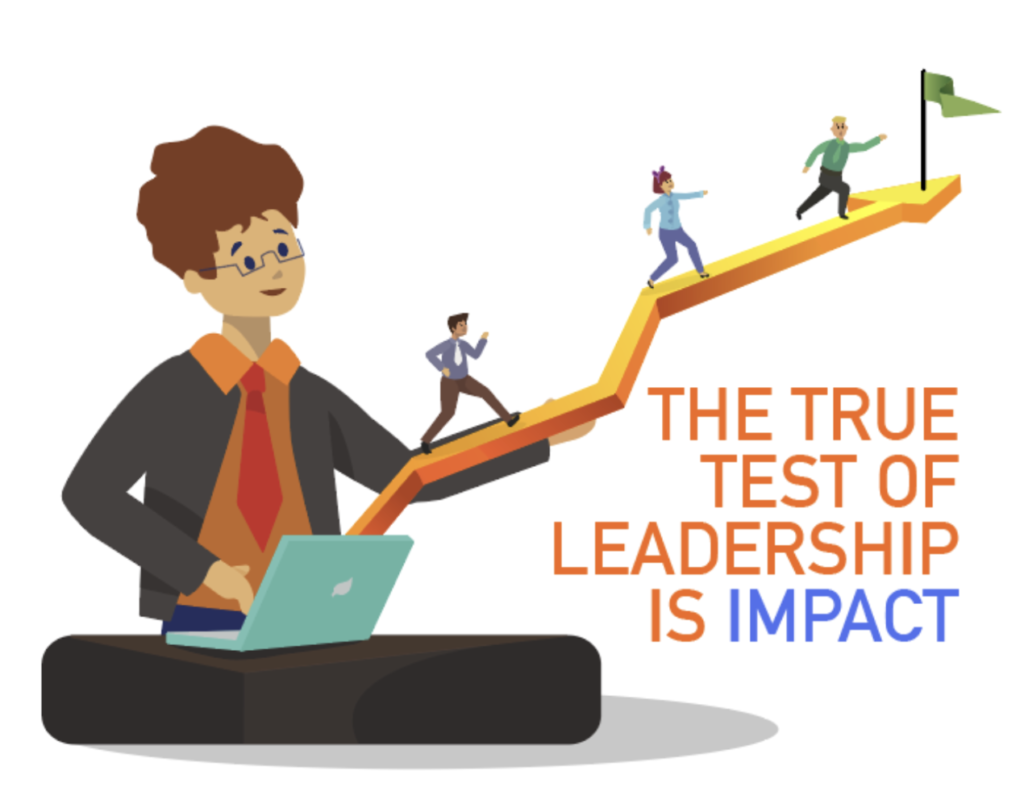
Leadership will always be tested – not in the grand moments but in the everyday decisions that shape how people feel and work.
When teams feel supercharged, when processes reduce friction instead of adding it, and when technology supports rather than distracts, leadership is working as it should.
And if those pieces are missing, no amount of vision or charisma can fill the gap.
Because in the end, the true test of leadership is simple: does it help people do their best work?
This post combines the author’s personal thoughts, ideas, and experiences, with some refinement provided by our Agile Bot AgiNomi.
If you’re leading a high-stakes initiative – in tech, AI, or innovation – OutcomeEdge is here to make sure it actually lands.
We partner with visionary leaders ready to move fast, align their teams, and deliver real impact.
You’ve got great people. But results are stuck. Our Outcome Discovery workshop reveals the root causes behind delivery slowdowns, misaligned priorities, and team fatigue.
Too many teams are overbuilt, underpowered, or unclear. We help you design outcome-focused pods: right size, right skills, right rituals.

Agile Coach
I’m a leader who serves as an Agile Coach in organizations.
I help senior leadership plan long-term strategic decisions while embracing the Agile mindset.
I also work with teams to help them become self organizing on their journey of providing value to the customers.
I see my clients as creative, resourceful, and whole and I’m here to walk alongside them to achieve business outcomes.

Transformation Partner (Agilonomics)
Amitabh (Amit) Sinha is a global transformation leader who helps organizations supercharge their teams and eliminate dysfunctions. Drawing on Patrick Lencioni’s Five Dysfunctions of a Team framework, Amit guides teams to move up the maturity curve—building trust, fostering accountability, and aligning around outcomes.
As Founder of Agilonomics, he has enabled Fortune 500 companies and high-growth organizations to set up teams the right way—establishing processes that actually work, scaling collaboration across business and technology, and introducing the right tools with the right practices.
In partnership with Recro, Amit ensures that every team built through Recro is not only staffed with top talent, but also equipped to function as one unit, deliver consistently, and create lasting impact.