
People managers play a critical role in SAFe (Scaled Agile Framework) environments. Unlike traditional management roles, which often focus on control, authority, and pushing for results, SAFe encourages value delivery with a servant leadership approach.
Let’s be clear-SAFe is based on Agile values and principles, but at scale. This means we need to apply the same values across larger groups of people who are working to create bigger product increments. Remember – the actual work still happens in teams, often Scrum or Kanban teams, with 5-10 people, including the Scrum Master and Product Owner.
If you take a close look at SAFe principles and philosophy, you’ll notice that SAFe highly supports soft skills, servant leadership, collaboration, Agile leadership, and value delivery. People managers in SAFe need to operate differently from traditional managers. Here’s how I see the key differences:
In my experience, a SAFe people manager will let the Scrum Master take the lead on team dynamics while stepping in to clear bigger impediments that the team cannot resolve on their own. This calls for servant leadership-walking the talk and demonstrating commitment to the team’s growth and success. And this approach brings a sense of accountability and empathy to the table, which makes a huge difference.
In contrast, traditional managers might try to control everything, resulting in teams that are disempowered. They end up managing results rather than nurturing the individuals responsible for those results.
This difference in mindset is critical-you’re either building empowered teams or managing results, and SAFe is very much about the former.
Here are some key qualities you must embrace for being an effective people manager in Agile SAFe:
1. Embrace SAFe Values and Principles
People managers in a SAFe environment need to embody Agile and SAFe values in their day-to-day behaviors. Do not just talk about empowerment-strive to live it. You must let go of command and control tendencies and trust the Scrum Master to guide and mentor the team. I’ve seen many times managers overrule Scrum Masters which weakens Scrum and creates dysfunction within the team.
2. Be a Servant Leader
A strong people manager knows how to be a servant leader. In a SAFe setup, this means supporting the Scrum Master and also stepping up to remove larger impediments outside the team’s control. This sends a message to the team that you are part of the journey and transformation. You build trust, accountability, and empathy-very needed to build a thriving team.
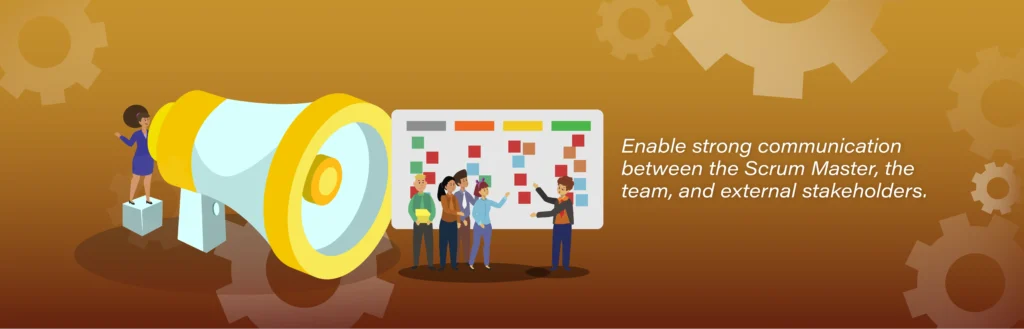
3. Facilitate Strong Communication Channels
Enable strong communication between the Scrum Master, the team, and external stakeholders. Effective people managers help bridge the gap between teams and upper management, ensuring that obstacles are cleared and dependencies are managed. How many times have we seen teams get demotivated because a key dependency wasn’t resolved on time? A solid people manager helps the Scrum Master build those relationships and keep communication flowing smoothly.
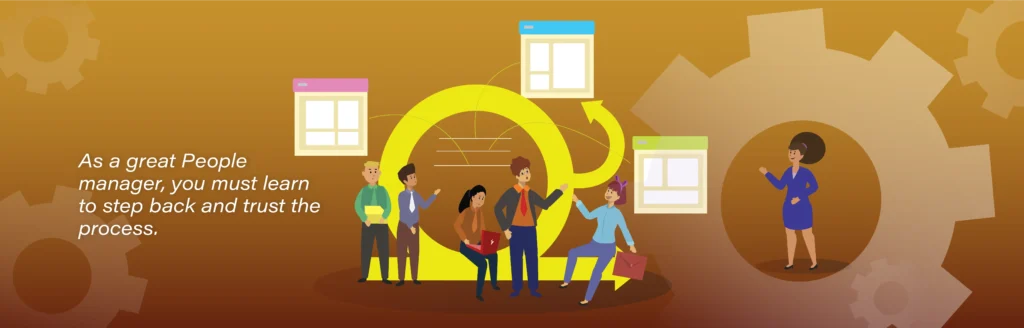
4. Be Non-Interfering in Team Events
As a great People manager, you must learn to step back and trust the process. Yes, you have a vested interest in team outcomes, but that doesn’t mean you should be involved in every team event or try to steer it. Trust your team. Let them collaborate, self-organize, and make decisions within the framework of SAFe Scrum. If you intervene too much, you will risk undermining the Scrum Master and disempowering the team.
I’ve often seen two camps in organizations-those who want “All SAFe or nothing” and those who completely reject it. I suggest that you find the middle path. You will need to objectively assess what SAFe recommends, and then see where you can bring in organic practices that make sense for your teams.
An example: PI Planning in SAFe can be overwhelming, with 150+ people working together for days to plan stories for 5-6 sprints. What I’ve seen work best is helping teams plan story-level work for the first two sprints and keep the rest lightweight. Why? Because things change. Work from previous sprints often overflows, priorities shift, and new demands creep in. Teams we’ve coached in this way have found PI planning to be much smoother and less taxing, without sacrificing value delivery.
This mindset will show your true SAFe people manager leadership and help your team stay focused and energized throughout the process.
This post combines the author’s personal thoughts, ideas, and experiences, with some refinement provided by our Agile Bot AgiNomi.
If you’re leading a high-stakes initiative – in tech, AI, or innovation – OutcomeEdge is here to make sure it actually lands.
We partner with visionary leaders ready to move fast, align their teams, and deliver real impact.
You’ve got great people. But results are stuck. Our Outcome Discovery workshop reveals the root causes behind delivery slowdowns, misaligned priorities, and team fatigue.
Too many teams are overbuilt, underpowered, or unclear. We help you design outcome-focused pods: right size, right skills, right rituals.

Agile Coach
I’m a leader who serves as an Agile Coach in organizations.
I help senior leadership plan long-term strategic decisions while embracing the Agile mindset.
I also work with teams to help them become self organizing on their journey of providing value to the customers.
I see my clients as creative, resourceful, and whole and I’m here to walk alongside them to achieve business outcomes.

Transformation Partner (Agilonomics)
Amitabh (Amit) Sinha is a global transformation leader who helps organizations supercharge their teams and eliminate dysfunctions. Drawing on Patrick Lencioni’s Five Dysfunctions of a Team framework, Amit guides teams to move up the maturity curve—building trust, fostering accountability, and aligning around outcomes.
As Founder of Agilonomics, he has enabled Fortune 500 companies and high-growth organizations to set up teams the right way—establishing processes that actually work, scaling collaboration across business and technology, and introducing the right tools with the right practices.
In partnership with Recro, Amit ensures that every team built through Recro is not only staffed with top talent, but also equipped to function as one unit, deliver consistently, and create lasting impact.