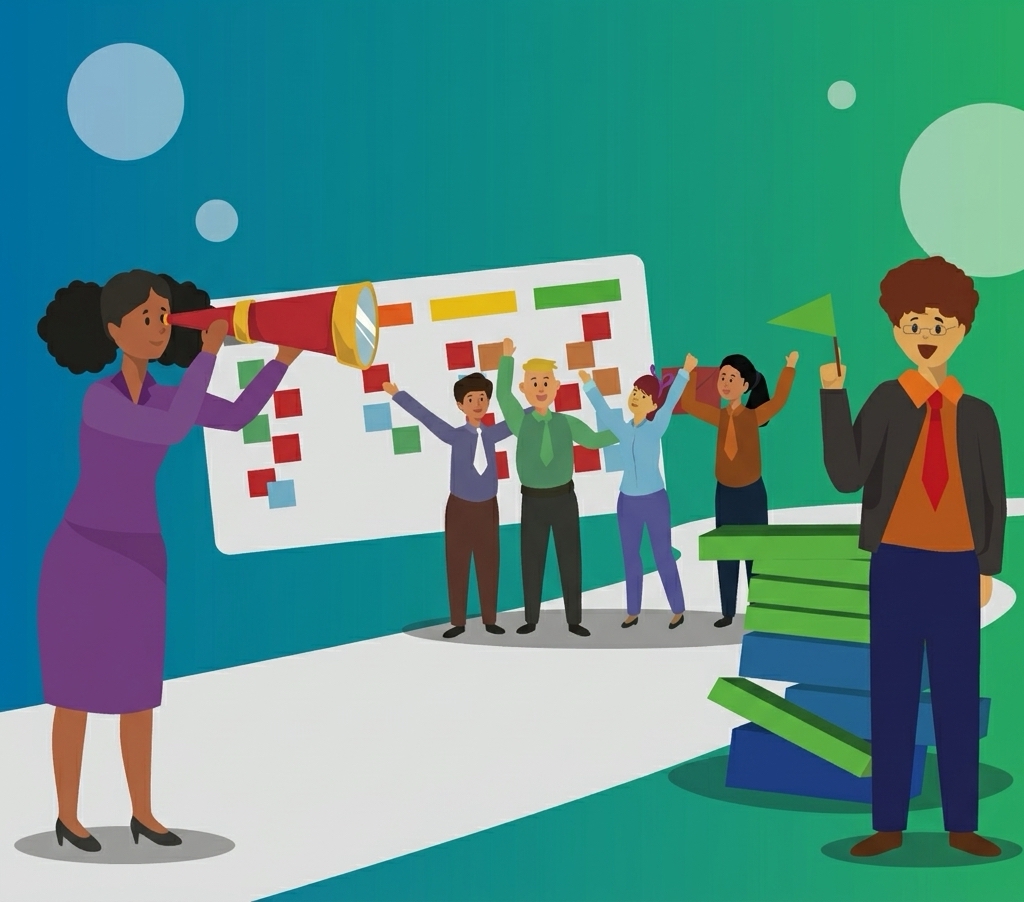

The Agile Manifesto made its priorities clear over two decades ago:
individuals and interactions over processes and tools.
Yet somewhere along the way, many organizations seem to have forgotten this.
Agile has been rebranded into frameworks, metrics, and dashboards. Conversations drift toward technology, velocity, and automation. However, after years of spending time with individuals, teams and leaders, one thing is clear: Agile without people at the center is an empty exercise.
The Shift Toward Mechanized Agile
It is easy to see how the shift happened. Enterprises invested heavily in tooling, reporting, and scaling frameworks. Leaders wanted predictability and numbers that looked good on slides. Teams adapted by focusing more on compliance than collaboration.
Scrum ceremonies became status updates instead of conversations. Retrospectives became mechanical routines rather than catalysts for growth. Delivery metrics overshadowed trust, creativity, and genuine problem-solving.
At a recent Government Enterprise gig in the east coast, working with a team, I helped bring back the true retrospective spirit. We not only had powerful conversations in the retrospectives, but also created an Epic called “Improvement Items”, where PBIs under the epic reflected actual work done to help the team track actions to move the needle forward. The Product Manager spearheading this innovative multi million dollar project impacting the entire state told me, “Amit, it feels so good to see actual improvement items being tracked as it makes us accountable. Before we were only talking but nothing much was happening”
When events miss their true essence, a version of Agile efficient on the surface but hollow (ineffective) at its core begins to shape up.
Why People Still Matter Most
Agility was never about perfect processes. It was about creating environments where people can work together to solve meaningful problems. The frameworks are scaffolding – the real work happens in the space between individuals.
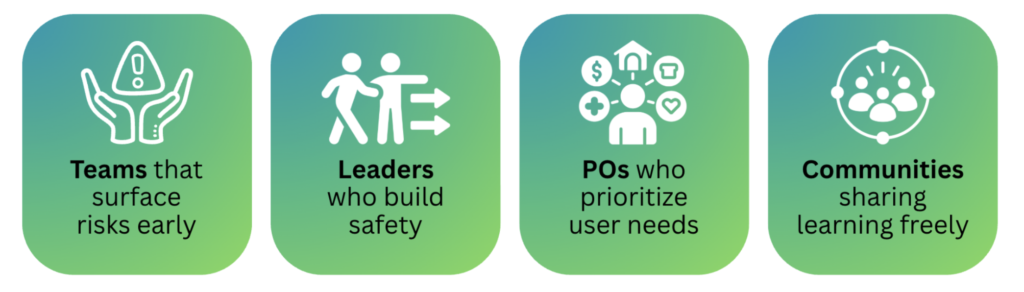
Consider what actually drives success in Agile organizations:
No tool or process can replace these dynamics. They are built by people, through relationships, conversations, and shared accountability.
The Cost of Ignoring People
When organizations sideline the human element, the consequences are predictable. Engagement declines, innovation slows, and delivery becomes transactional. Teams stop asking “Why?” and focus only on “How fast?”
This erosion of meaning is subtle but destructive. A team might meet every target and still feel disconnected from the value of their work. Leaders might celebrate throughput while customers experience little improvement. The organization may look nimble on paper while struggling to adapt in reality.
Agility without human factor is not resilience. It is fragility masked by numbers.
Re-Centering Agile on Humanity
So how do we bring Agile back to its core? It starts by reframing success. Instead of defining progress by metrics alone, leaders must ask: Are our people engaged? Are they learning? Are they enabled to deliver value that matters to users?
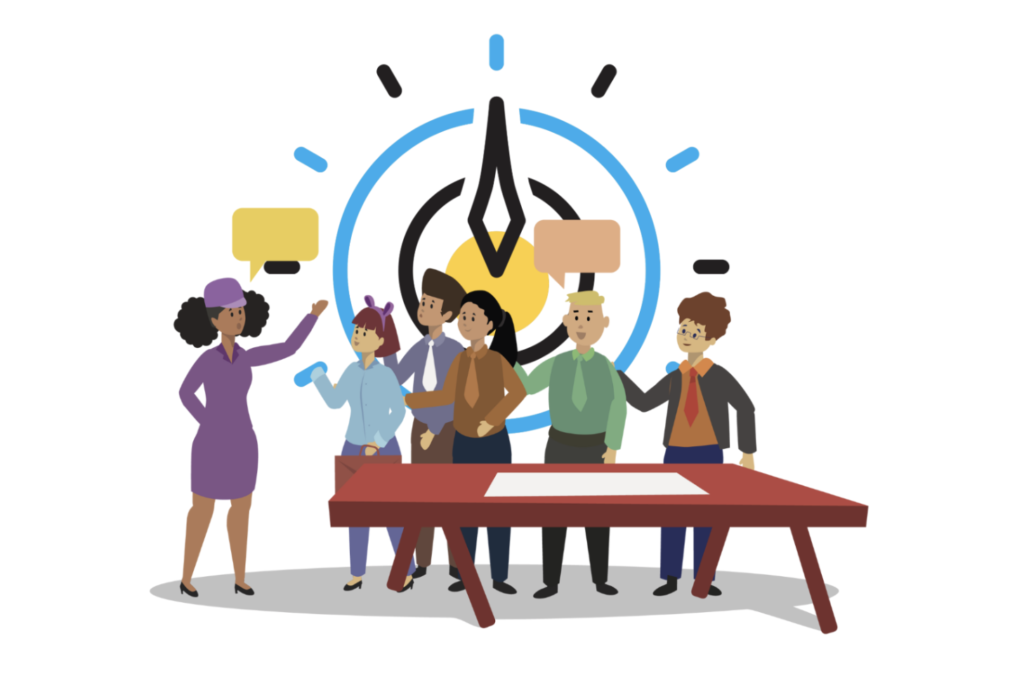
This means:
Agile thrives when people thrive. It breaks down when individuals are reduced to “resources.”
The Point We Cannot Lose
At its heart, Agile is not about tools, frameworks, or even products. It is about people coming together to solve complex problems in ways that create value.
The irony is that by centering people, organizations achieve the very goals they chase through process – faster delivery, better adaptability, and sustainable growth. But skip over the human side, and all the processes in the world won’t produce meaningful agility.
If Agile isn’t about people, then what’s left is process theater. Teams go through motions, leaders collect reports, and the language of agility is spoken without its spirit.
So we have to ask the hard question: If Agile isn’t about people, what’s the point?
This post combines the author’s personal thoughts, ideas, and experiences, with some refinement provided by our Agile Bot AgiNomi.
If you’re leading a high-stakes initiative – in tech, AI, or innovation – OutcomeEdge is here to make sure it actually lands.
We partner with visionary leaders ready to move fast, align their teams, and deliver real impact.
You’ve got great people. But results are stuck. Our Outcome Discovery workshop reveals the root causes behind delivery slowdowns, misaligned priorities, and team fatigue.
Too many teams are overbuilt, underpowered, or unclear. We help you design outcome-focused pods: right size, right skills, right rituals.

Agile Coach
I’m a leader who serves as an Agile Coach in organizations.
I help senior leadership plan long-term strategic decisions while embracing the Agile mindset.
I also work with teams to help them become self organizing on their journey of providing value to the customers.
I see my clients as creative, resourceful, and whole and I’m here to walk alongside them to achieve business outcomes.

Transformation Partner (Agilonomics)
Amitabh (Amit) Sinha is a global transformation leader who helps organizations supercharge their teams and eliminate dysfunctions. Drawing on Patrick Lencioni’s Five Dysfunctions of a Team framework, Amit guides teams to move up the maturity curve—building trust, fostering accountability, and aligning around outcomes.
As Founder of Agilonomics, he has enabled Fortune 500 companies and high-growth organizations to set up teams the right way—establishing processes that actually work, scaling collaboration across business and technology, and introducing the right tools with the right practices.
In partnership with Recro, Amit ensures that every team built through Recro is not only staffed with top talent, but also equipped to function as one unit, deliver consistently, and create lasting impact.