

Agile transformation is often misunderstood as a one-time event or a quick fix. In reality, it’s a continuous journey. The term “transformation” itself is slightly misleading – what we are doing is creating new possibilities for more effective ways of working. This journey starts with understanding the current challenges and working together, as partners, to realize desired outcomes through Agile practices.
The initial kick-off meeting is crucial. Bringing the leadership team together with the coach for a “make or break” session sets the tone for the entire journey. In this session, the coach should connect with the leaders, listen carefully to their concerns, and observe the dynamics at play. This helps align everyone on the goals and the roadmap ahead.
The foundation of a successful Agile transformation starts with alignment and trust.
As a coach, I ask for permission to observe the teams as a “fly on the wall.” This gives me a first-hand understanding of how teams are currently working – what meetings they hold, what tools they use, and how effective their interactions are.
All of this forms a foundation to create a roadmap for the journey ahead.
I also bring leadership together for a 2 day immersive workshop that aligns them on the basics of Agile values, principles, and practices. This step is vital – it ensures that everyone is on the same page before we even start implementing changes.
At the end of this initial phase, I present a detailed observation and recommendation deck to the leadership team. By this time they are in a state to better understand the current state and recommendations being made. They can wisely negotiate amongst themselves and with the coach on what pieces will work for them and what they need to get their teams ready for the journey ahead.
Agile transformations come with their own set of challenges. While tracking progress is important, addressing these obstacles is equally critical for success. I share a few critical ones below:
Disagreements Among Leadership: Misalignment between department directors and managers can confuse teams and disempower Scrum Masters. For example, one senior manager insisted on four-week sprints, which led to inefficiencies, while other teams thrived with two-week cadences.
Team Resistance to Agile Practices: Teams often resist Agile ceremonies or new ways of working. A coach, partnered with leadership, can ensure teams give these practices a fair trial, helping overcome resistance and build momentum.
Leadership Disengagement: Transformation requires active leadership involvement beyond just attending meetings. Regular one-on-one coaching with directors and managers is essential to keep them engaged and accountable.
Organizational Politics: Senior team members may resist change and hold on to old ways of working. If not managed carefully, this can derail the transformation. Patience and persistence are key in overcoming such politics.
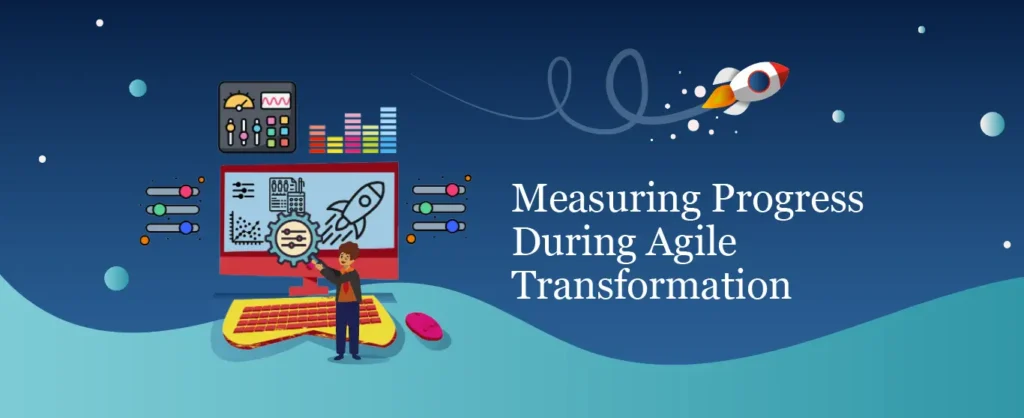
Finally, tracking the right metrics is crucial to gauge the effectiveness of an Agile transformation. Don’t focus on just output but also on how well teams are delivering value and improving. Here’s how I track progress:
Team Effectiveness and Value Delivery: The goal is continuous value delivery. Stable velocity, high predictability are good, but what matters is if teams deliver real value. I track monthly releases, desired outcomes achieved and reductions in escaped defects to ensure outcomes, speed and quality.
Leadership Engagement and Impediment Resolution: Leadership must step in to resolve high-impact impediments outside of teams’ control. I use an Impact Impediment Board to track these, ensuring leaders demonstrate servant leadership and walk the talk by actively supporting teams.
Team Happiness and Collaboration: Agile success hinges on team well-being. I track team happiness via surveys and one-on-one conversations. Happy, empowered teams are naturally more productive and collaborative.
Cross-Functionality and Process Efficiency: I measure process efficiency (cycle time and active work vs. time in progress) to assess collaboration and break silos. High collaboration creates effective, cross-functional teams crucial to Agile success.
Conclusion:
Agile transformation is a continuous journey of learning and growth, starting with trust, alignment, and the right mindset. Effective tracking should include value delivery, leadership engagement, and team empowerment.
Strong servant leadership, open communication, and regular reflection on progress will help you achieve success.
This post combines the author’s personal thoughts, ideas, and experiences, with some refinement provided by our Agile Bot AgiNomi.
If you’re leading a high-stakes initiative – in tech, AI, or innovation – OutcomeEdge is here to make sure it actually lands.
We partner with visionary leaders ready to move fast, align their teams, and deliver real impact.
You’ve got great people. But results are stuck. Our Outcome Discovery workshop reveals the root causes behind delivery slowdowns, misaligned priorities, and team fatigue.
Too many teams are overbuilt, underpowered, or unclear. We help you design outcome-focused pods: right size, right skills, right rituals.

Agile Coach
I’m a leader who serves as an Agile Coach in organizations.
I help senior leadership plan long-term strategic decisions while embracing the Agile mindset.
I also work with teams to help them become self organizing on their journey of providing value to the customers.
I see my clients as creative, resourceful, and whole and I’m here to walk alongside them to achieve business outcomes.

Transformation Partner (Agilonomics)
Amitabh (Amit) Sinha is a global transformation leader who helps organizations supercharge their teams and eliminate dysfunctions. Drawing on Patrick Lencioni’s Five Dysfunctions of a Team framework, Amit guides teams to move up the maturity curve—building trust, fostering accountability, and aligning around outcomes.
As Founder of Agilonomics, he has enabled Fortune 500 companies and high-growth organizations to set up teams the right way—establishing processes that actually work, scaling collaboration across business and technology, and introducing the right tools with the right practices.
In partnership with Recro, Amit ensures that every team built through Recro is not only staffed with top talent, but also equipped to function as one unit, deliver consistently, and create lasting impact.