

This is an informative, educational article and is being written in two parts. Part 1, below is an introduction about Data Science Teams, the challenges they face. Part 2, that comes later, will cover detailed strategies on how to make Data Science project development effective using Agile ways of working
In today’s fast-paced, emerging and evolving digital world, data science and engineering teams play a central role in driving innovation and competitive advantage for organizations. However, the complexity of their work, alongwith with the dynamic nature of the industry, presents unique challenges that traditional project management approaches struggle to address effectively.
As an Enterprise Agile Coach working closely with development teams, I often see the challenges data scientists face in managing the complexity of their projects. From dealing with massive datasets to harnessing the power of AI and machine learning, these teams encounter obstacles that demand a fresh perspective and Agile solutions.
In this blog, we’ll look into the complexities of data science work and explore how Agile thinking can offer a pathway to success. Drawing from personal experiences and industry insights, we’ll uncover the importance of embracing Agile principles and practices to overcome the challenges inherent in data-driven projects.
Data science and engineering teams encounter various obstacles that can slow their progress and impact the success of their projects. To gain a better understanding of these challenges, let’s explore the historical evolution of data science methodologies and frameworks.
As data science continues to evolve, so do the methodologies and frameworks that guide its practice. One such approach is the circular model, which forms the foundation for various methodologies employed in the industry. Below is a brief text on the evolution of this approach followed by some of the key methodologies that have emerged over time.
The circular approach, also known as Agile-ish development within the data science realm, has undergone significant evolution to meet the changing demands of the field. Initially, the focus was on creating a flexible and adaptable framework that could accommodate the iterative nature of data science projects. Over time, this approach has matured, leading to the development of structured methodologies that provide clear guidelines for practitioners.
Among the methodologies that have emerged, IBM’s CRISP-DM (Cross-Industry Standard Process for Data Mining) stands out as one of the most widely adopted frameworks. CRISP-DM offers a structured approach to data mining projects, with well-defined stages that guide practitioners through the entire process. The CRISP-DM model defines six crucial phases in the data science life cycle, demanding meticulous attention and expertise at each stage. These six stages are: Business Understanding, Data Understanding, Data Preparation, Modeling, Evaluation, and Deployment
In addition to CRISP-DM, several other popular methodologies have emerged to guide data science projects. These include the OSEMN (Obtain, Scrub, Explore, Model, Interpret) model, which emphasizes a systematic approach to data analysis.
The KDD (Knowledge Discovery in Databases) process is another widely used framework that focuses on extracting useful knowledge from large datasets.
Additionally, SEMMA (Sample, Explore, Modify, Model, Assess) offers a structured approach to data analysis, while TDSP (Team Data Science Process) emphasizes collaboration and teamwork throughout the project lifecycle.
Furthermore, KDNuggets CRISP-DM, a modified version of the original CRISP-DM model by KDnuggets, and LIFT (Lightweight Iterative Framework for Text Mining) provide specialized approaches tailored to specific data science tasks and domains.
Each of these methodologies brings its own set of principles and practices to the table, catering to the diverse needs of organizations in the field of data science.
As data science continues to evolve, so too will the methodologies and frameworks used to guide its practice. By understanding the evolution of the circular approach and exploring the key methodologies employed in the industry, data science and engineering teams can gain valuable insights into how best to approach their projects and overcome the challenges they may face.
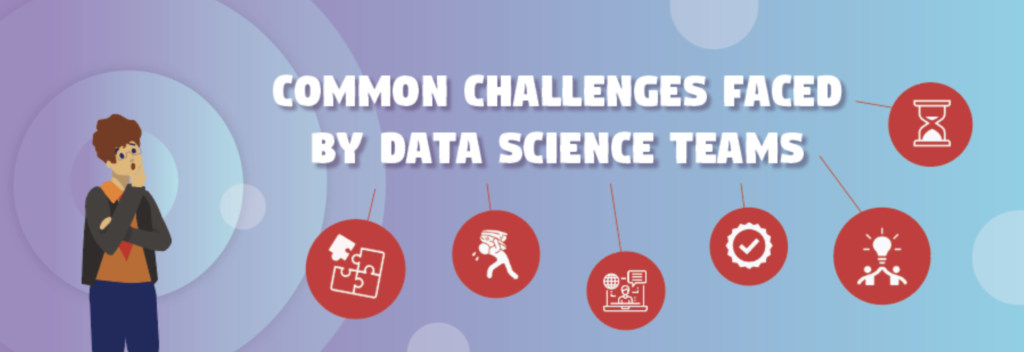
We will primarily focus on the CRISP-DM model to help understand the common challenges faced in Data Science projects.
Splitting Work to Provide Incremental Value: Integrating the six phases of the CRISP-DM model into user stories presents a significant challenge for data science teams. How do we fit all phases into a single 2-week Sprint? How do we show and deliver value when the work is split to fit in the Sprint?
Dealing with Massive Datasets: Data science projects often involve working with massive datasets, requiring teams to develop efficient strategies for data collection, storage, and analysis. Managing and processing such large volumes of data can strain people, resources and infrastructure, posing a significant challenge to teams.
Harnessing the Power of AI and Machine Learning: With the increasing adoption of AI and machine learning technologies, data science teams must stay abreast of the latest developments and best practices in these areas. Incorporating AI and machine learning into projects requires specialized knowledge and skills, presenting a challenge for teams that may lack expertise in these domains.
Ensuring Data Quality and Integrity: Maintaining data quality and integrity is critical in data science projects, as the accuracy of insights and decisions hinges on the reliability of the underlying data. However, ensuring data quality can be challenging, particularly when dealing with diverse data sources and incomplete or inconsistent data.
Managing Project Timelines and Deadlines: Data science projects often operate under tight timelines and deadlines, requiring teams to deliver results within specified timeframes. However, the iterative nature of data science work, coupled with the unpredictability of data-related tasks, can make it challenging to tight project schedules.
Collaborating Across Multidisciplinary Teams: Data science projects typically involve collaboration across multidisciplinary teams, including data scientists, data engineers, analysts, and domain experts. Effective communication and collaboration is the need, but coordinating efforts across diverse teams with varying skill sets and perspectives can be challenging.
In the next part of our journey, we’ll dive deeper into the world of Agile methodologies and show how its principles, processes, practices and mindset can help effectively develop and deliver data science projects.
We’ll explore how Agile thinking can empower data science teams to overcome challenges and achieve unparalleled success by leveraging collaboration, adaptability, empowerment, swarming, short feedback loops, etc. to support innovation and efficiency.
This post combines the author’s personal thoughts, ideas, and experiences, with some refinement provided by our Agile Bot AgiNomi.
If you’re leading a high-stakes initiative – in tech, AI, or innovation – OutcomeEdge is here to make sure it actually lands.
We partner with visionary leaders ready to move fast, align their teams, and deliver real impact.
You’ve got great people. But results are stuck. Our Outcome Discovery workshop reveals the root causes behind delivery slowdowns, misaligned priorities, and team fatigue.
Too many teams are overbuilt, underpowered, or unclear. We help you design outcome-focused pods: right size, right skills, right rituals.

Agile Coach
I’m a leader who serves as an Agile Coach in organizations.
I help senior leadership plan long-term strategic decisions while embracing the Agile mindset.
I also work with teams to help them become self organizing on their journey of providing value to the customers.
I see my clients as creative, resourceful, and whole and I’m here to walk alongside them to achieve business outcomes.

Transformation Partner (Agilonomics)
Amitabh (Amit) Sinha is a global transformation leader who helps organizations supercharge their teams and eliminate dysfunctions. Drawing on Patrick Lencioni’s Five Dysfunctions of a Team framework, Amit guides teams to move up the maturity curve—building trust, fostering accountability, and aligning around outcomes.
As Founder of Agilonomics, he has enabled Fortune 500 companies and high-growth organizations to set up teams the right way—establishing processes that actually work, scaling collaboration across business and technology, and introducing the right tools with the right practices.
In partnership with Recro, Amit ensures that every team built through Recro is not only staffed with top talent, but also equipped to function as one unit, deliver consistently, and create lasting impact.