

In my 20+ years of association with software development, one thing I’ve realized is how important it is to select the right people for an Agile transformation. These transformations are costly – both in terms of time and resources – so it’s crucial to get it right from the start. It’s more than just coaching the developers; you need managers, leaders, specialists, and executives all working together.
Even just talking to teams and individuals to find out if they will genuinely support the transformation can be time-consuming and energy-draining.
Agile has huge potential if implemented wisely. But many organizations are still recovering from previous failed experiences. VPs often ask me, “Amit, can you kick off the introductory leadership meeting without using the words ‘Agile’ or ‘Scrum’?”
This is because past attempts burned people. They were stuck in a mindset that focused on forced ceremonies, checklist Agile, rebranding roles without actually influencing behaviors. Teams went through the motions, but the desired outcomes were not achieved.
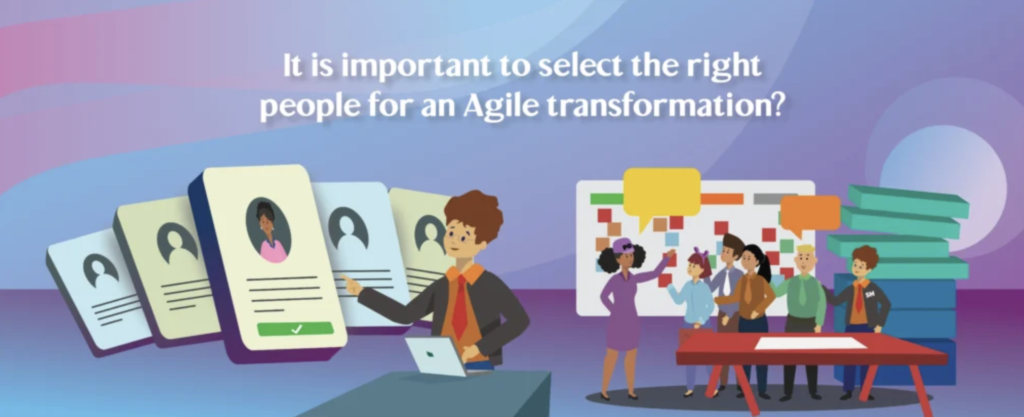
This is why it’s so important to pick the right people. You need your initial teams to succeed, and the transformation has to be lasting and valuable for everyone involved.
In my experience, the key is building teams that work like a cohesive unit – teams that tackle problems together and come out winning every time.
In any Agile transformation, the people leading or participating need to have certain key qualities.
First, they must practice servant leadership. These are the leaders who truly support their teams, creating an environment where collaboration and innovation can thrive. You also need visionaries – people who can see the big picture, not just at the product level but at the process level too.
Leaders must walk the talk. They need to stay open to ideas from their teams, look at how others have succeeded, and learn from those experiences. Patience, perseverance, and a balance of firmness with kindness are essential qualities. When leaders behave this way, they empower their people and help cut down on bureaucracy.
In fact, an article from Harvard Business Review talks about a concept called Organizational Network Analysis (ONA), which suggests that identifying key influencers in an organization can help transformations succeed. But I believe it misses a critical point. Success is not merely choosing the right “star people.” It’s really about creating a culture where people feel safe to step up. This is why having an experienced coach who understands the human side of Agile is so important.
For example, bringing in systems thinking in product development can make all the difference. Many Agile teams focus on velocity, burndown charts, and predictability, but those metrics don’t always prove customer value. Teams need to build visual maps and align on the bigger picture to create a development strategy that tackles competition, risks, and desired outcomes. This can take time to learn, and sometimes Product Managers push back because they’re used to working at a fast pace with short cuts. But when done right, this approach sets teams up for long-term success.
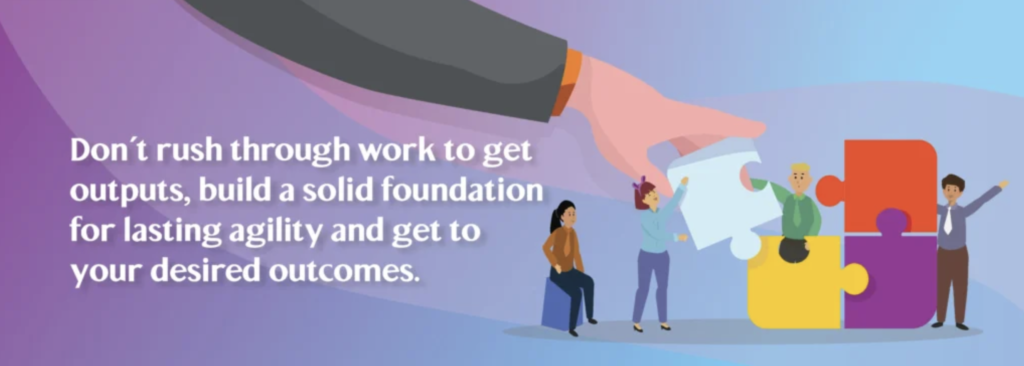
Agile visionaries, working with experienced coaches, make this kind of big-picture thinking possible. Don’t rush through work to get outputs. Rather, build a solid foundation for lasting agility and get to your desired outcomes.
Agile transformations can fail when the wrong people are chosen. Too often, companies try to save money by hiring inexperienced or cheap Agile coaches. Just having the title “Agile Coach” doesn’t make someone qualified. A good coach needs real-world experience including both success and failure, and strong people skills to guide teams through the process.
Read: Why Agile Coaching is Essential for Teams Transformations
I’ve seen this happen before. I was brought in to fix a failed transformation at a large enterprise where multiple coaches were fired due to conflicts with employees enforcing practices without proper buy in. This wasted time and money for the organization.
The Right Mix of Technical Expertise and Agile Mindset
I often emphasize Test-Driven Development (TDD) and systems thinking because they are crucial for building high-quality products quickly. TDD allows teams to move at a high velocity with confidence, knowing that their code is well-tested and reliable.
Creating cross-functional teams is just as important. You need to nurture teams that can handle multiple tasks, not just rely on specialists. This ensures flexibility and collaboration across the board.
Unfortunately, many teams prioritize the backlog based on available skills instead of value. Leaders need to take ownership, put their foot down, be firm in setting expectations, and support their teams in learning new skills to ensure long-term success.
The HBR article on Organizational Network Analysis (ONA) touches on identifying key influencers, but real change comes when leaders actively guide teams and are part of the journey.
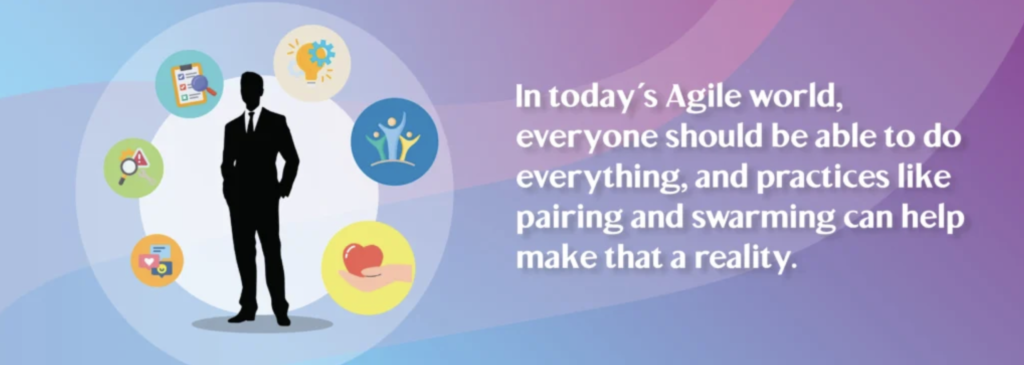
And here’s a funny thing I’ve noticed – testers are often treated as specialists, reporting to another department. In today’s Agile world, everyone should be able to do everything, and practices like pairing and swarming can help make that a reality.
This post combines the author’s personal thoughts, ideas, and experiences, with some refinement provided by our Agile Bot AgiNomi.
If you’re leading a high-stakes initiative – in tech, AI, or innovation – OutcomeEdge is here to make sure it actually lands.
We partner with visionary leaders ready to move fast, align their teams, and deliver real impact.
You’ve got great people. But results are stuck. Our Outcome Discovery workshop reveals the root causes behind delivery slowdowns, misaligned priorities, and team fatigue.
Too many teams are overbuilt, underpowered, or unclear. We help you design outcome-focused pods: right size, right skills, right rituals.

Agile Coach
I’m a leader who serves as an Agile Coach in organizations.
I help senior leadership plan long-term strategic decisions while embracing the Agile mindset.
I also work with teams to help them become self organizing on their journey of providing value to the customers.
I see my clients as creative, resourceful, and whole and I’m here to walk alongside them to achieve business outcomes.

Transformation Partner (Agilonomics)
Amitabh (Amit) Sinha is a global transformation leader who helps organizations supercharge their teams and eliminate dysfunctions. Drawing on Patrick Lencioni’s Five Dysfunctions of a Team framework, Amit guides teams to move up the maturity curve—building trust, fostering accountability, and aligning around outcomes.
As Founder of Agilonomics, he has enabled Fortune 500 companies and high-growth organizations to set up teams the right way—establishing processes that actually work, scaling collaboration across business and technology, and introducing the right tools with the right practices.
In partnership with Recro, Amit ensures that every team built through Recro is not only staffed with top talent, but also equipped to function as one unit, deliver consistently, and create lasting impact.